Uttarakhand Culture
Uttarakhand is a culturally colourful society which is divided into two major regions of Garhwal and Kumaon. The religious, social and cultural urges of the people of Uttarakhand find an expression in various fairs and festivals, which are in turn closely linked to the social and economic activities of the region.
The culture identifies its people uniquely and gives them a meaning. The various traditions, religions, fairs, festivals, folk dances, music are what distinctly separate them from the rest of the crowd. The residents of Uttarakhand are proud of the culture that they follow. The beauty of the state of Uttarakhand is that it houses people belonging to several sub-groups and ethnic groups together under one roof. This article talks about the culture, beliefs and traditions which bind the people of Uttarakhand together.
Religion
A major section of the people in Uttarakhand are Hindus. However, the state maintains a secular ambience with significant number of people belonging to other faiths like Islam, Sikhism, Buddhism and Christianity.
Art & Craft
The land of Uttarakhand is full of artisans and variety of art and craft. Both the rural and urban people indulge in producing/manufacturing some incredible crafts that are worth witnessing. Woodwork is a significant art form that the locals of Uttarakhand practise, apart from it, paintings from Garhwal School of Paintings and murals like Aipan demonstrate skills of the natives. The Ringaal Handicraft that is practised by a backward community named the same, is quite appreciable. The Rambaan Handicraft done by using Jute and Hemp also reflects the rich art and craft of Uttarakhand. Apart from it the woollen knitted wear and embroidered cushion covers, carpets, bedsheets and curtains by the rural women or urban women groups are a must buy from Uttarakhand. The candle making skills in the state are also at par excellence, there is an entire market in Nainital that is dedicated to this art.
Lifestyle
The lifestyle in Uttarakhand is heterogenous and one can mark the difference between the urban and rural life in the state. Since Uttarakhand comprises of both hilly and plain terrains that eventually demarcate the lifestyle in the state, and then there are areas in the hill that are remote and difficult to access, where obviously the way of life is entirely different. The urban areas like Dehradun, Nainital, Haldwani, Haridwar and a few others enjoy access to most of the modern facilities like top notch schools, hotels, shopping areas and restaurants with better job offers and economic status. The people are often seen engrossed in trying out the new technology, building better infrastructure and also working towards social reforms. Whereas, in the rural areas, life moves at its own pace, women here are seen taking care of their household as well as the agricultural work and collecting of woods from the forest. With the interference of NGOs and Government aid, many rural areas in Uttarakhand are making their living by selling organic products, handicrafts and homestays. While the urban people in Uttarakhand entertain themselves by going to the cinema or watching tv or indulging in modern sports, the rural gentry still enjoys organizing fairs, performing folk dance and devoting time in traditional art and craft.
Source of Economy
Uttarakhand is largely dependent on its agriculture for the revenue. Basmati rice, wheat, soybeans, groundnuts, coarse cereals, pulses, and oil seeds are the most widely grown crops in the state. There are also fruits like apples, oranges, pears, peaches, litchis, and plums that are widely grown in the state and bring a good amount of revenue. Other key industries for the source of economy include tourism and hydropower, and recently development in IT, ITES, biotechnology, pharmaceuticals, and automobile industries can also be seen in the state.
Dresses & Costumes
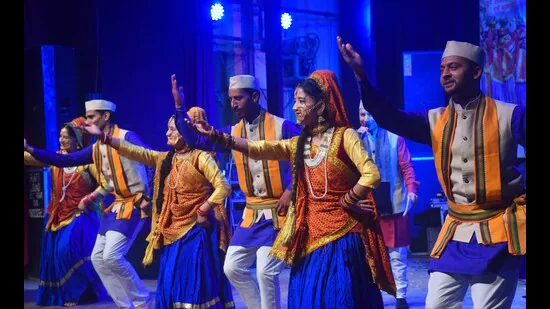
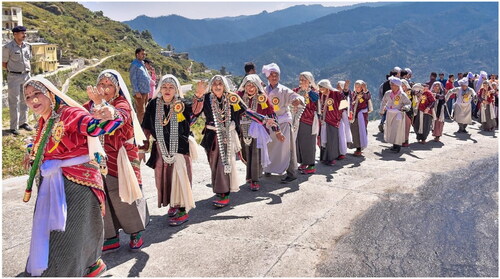
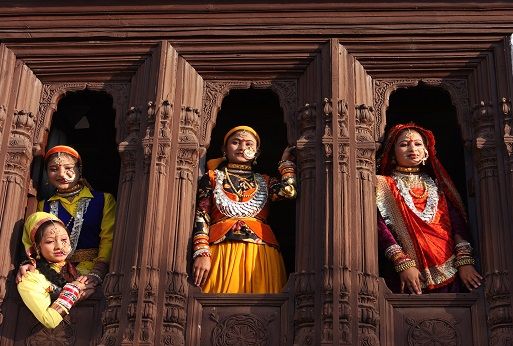
The traditional dress for women in Uttarakhand remains Sarong, a mantle-type dress, tightened with a blouse and an Odani and Khorpi. Whereas in the weddings or special occasion, native women are seen wearing the attractive Rangwali Pichora or Ghagra Choli. A significantly large nose ring (nath) and necklace called Galoband are also worn by the women during festivals/special occasion. The Rangwali Pichora is the dress worn by married women as it represents prosperity. There is also a region wise dress demarcation, in Garhwal Region, the tribal women living in the upper ranges of Uttarkashi and Chamoli wear warm woollens while those in lower regions or valleys can be seen wearing cotton clothes. The Rajput women of the region wear woollen garments made of Angora for most part of the year along with cotton Pagras and colourful Lehengas with silver necklace.
The Garhwali men wear Kurta Pyjama or Kurta dhoti and tie a turban specially in the colder months. They can also be seen wearing long necklaces made of silver and kadas on their hands. In Kumaon Region, the dresses are slightly different for women and so is the choice of colours. Ladies in Kumaon also have a different neck piece called Hansuli. Kumaoni men can be seen wearing same Kurta and Dhoti like the Garhwali men but they seem to be more fond of jewellery and often seen wearing a variety of it in neck and hands. There are different dresses of Jaunsari and Bhotiya tribes in the state. However, in the recent time, the people in Uttarakhand for daily life wear the modern jeans/trousers and t-shirt/shirt irrespective of gender. The women can also be seen in sarees and ladies suit.
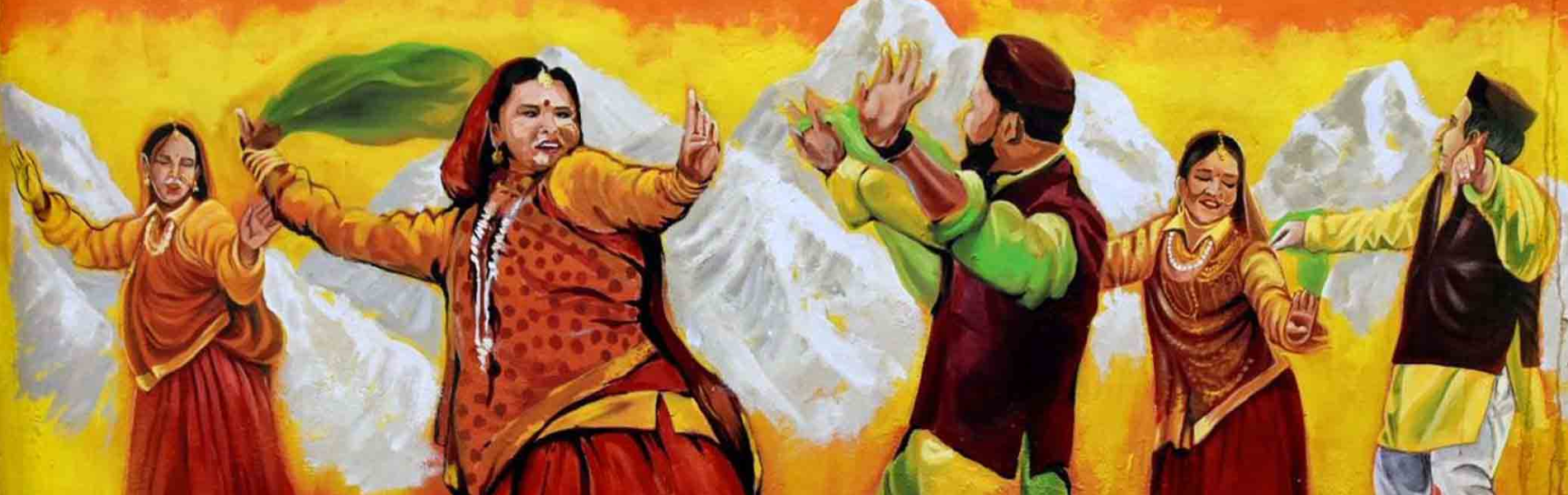
Uttarakhand is blessed with a rich Pahari culture. Folk dance and music play a huge part in enriching the culture. Major hindu aswell as some pahari festivals are celebrated here with enormous joy. There are many delicious local delicacies which one can enjoy seasonally.
Garhwali clothing is made from thick material of vibrant colors, the material is kept thick in order to prevent from harsh cold of himalyas.
Traditional dress for Men
Men wear kurta and payjama which is accompanied by a koti (a woolen coat). they also wear a pahari hat and jewellery on their neck and wrist as accessories.
Traditional dress for women
Women in the pithoragarh district wear saree. But their saree is tied differently, the pallu goes around the waist in order to show the most decorated part of saree. They also wear silver jewellery called hansuli
Women in kumaon region dress differently, they wear long skirts called Ghagri along with choli and ohrni. Ghagri can also be accompanied by a full sleeves shirt depending on the cold.
Women also wear a special type of dupatta which has a golden or silver lace this dupatta is called pichhora.